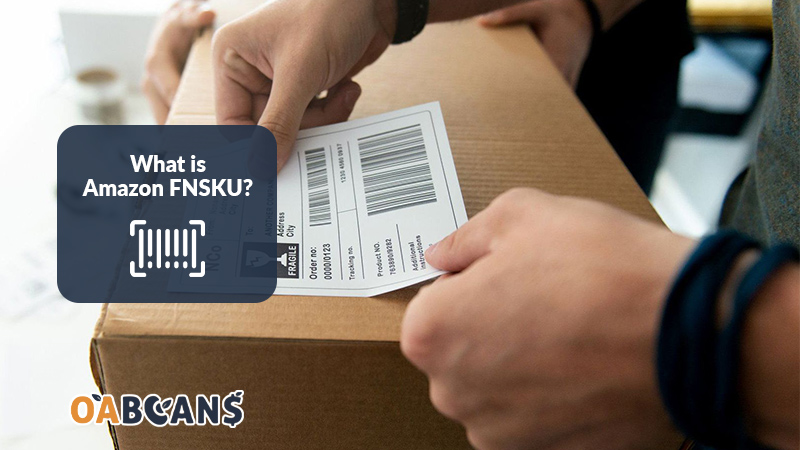
FNSKU meaning: FNSKU stands for Fulfillment Network Stock Keeping Unit. It is the barcode Amazon assigns to identify your units of a product inside its fulfillment centers, so Amazon knows which seller each item belongs to. An Amazon FNSKU usually starts with “X00” and is printed on the label you stick on every unit you send to FBA.
2026 update: Amazon ended FBA commingling (stickerless inventory) for shipments sent on or after March 31, 2026. Resellers, including online and retail arbitrage sellers and wholesale sellers who are not the brand owner, now need an FNSKU label on every unit. Amazon also stopped offering its FBA prep and label service in the US for shipments created from January 1, 2026, so labeling is your job or your prep center’s.
What is Amazon FNSKU?
Every product sent to an Amazon fulfillment center has to carry a scannable barcode so it can be received, stored and tracked. The FNSKU is unique to the seller and the product: if five sellers send the same item to FBA, each seller’s units have a different FNSKU, so Amazon never mixes one seller’s units with another’s. If a product has variations, such as sizes or colors, each variation has its own FNSKU.
Why FNSKU Matters for Amazon Sellers
- Inventory tracking and seller identity: the FNSKU links each unit to your account, so a counterfeit or damaged unit from another seller can never be shipped to your customer, and vice versa.
- Efficient fulfillment: when a unit is scanned, Amazon immediately knows which listing and which seller it belongs to.
- Compliance: since March 31, 2026, units from resellers that arrive without the required Amazon barcode can be treated as noncompliant. Amazon may refuse or return them, charge for noncompliance, and such units are not eligible for reimbursement.
What Are the Key Differences Between ASIN & FNSKU?
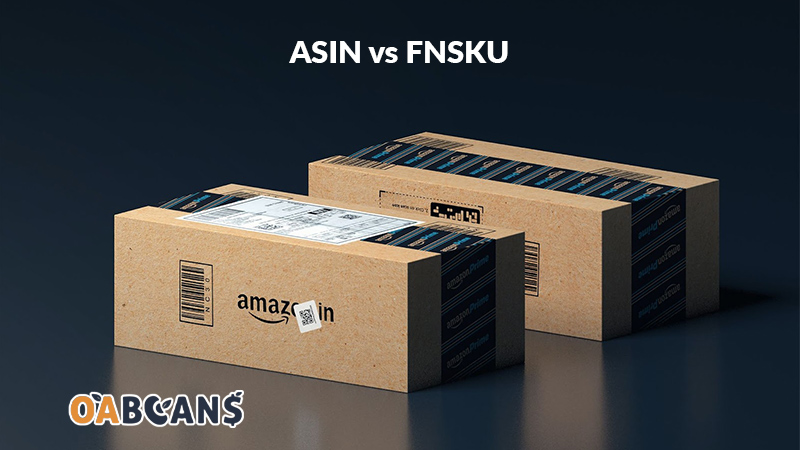
ASIN is the acronym for Amazon Standard Identification Number. This code is Amazon’s internal catalogue number, made up of 10 characters (most start with “B0”; for books it matches the ISBN-10) and it identifies the product itself, not your inventory. The ASIN is assigned by Amazon when the item is uploaded to the Amazon catalogue and is related to the product details on the listing page, such as titles, photos, etc.
The main difference between an FNSKU and Amazon ASIN number is their purpose. The ASIN code is used to identify products on the Amazon website rather than in fulfillment centers and warehouses. The other key difference between these two codes is that the ASIN is product-specific (identifies the product), while the FNSKU is seller-specific (identifies the product and the person it belongs to).
When a seller uses the manufacturer barcode instead of an Amazon barcode, Seller Central shows the FNSKU as identical to the ASIN. When you use Amazon barcodes, your FNSKU is a separate code (usually starting with “X00”) that is unique to your account. Since March 31, 2026, resellers must use Amazon barcodes, so their FNSKU will differ from the ASIN.
Differences Between UPC & FNSKU
UPC is an acronym for Universal Product Code. This is a universal 12-digit scannable barcode that identifies a single product and is used primarily in North America. The UPC is required to add products to the Amazon catalogue.
UPCs are added to a product or its packaging and are unique to each variation (colour, size, etc.). Any seller with the same product from the same manufacturer will use the same UPC.
The primary purpose of a UPC code is for manufacturers and retailers to identify a product at checkout and across the supply chain. Brand owners in Amazon Brand Registry can generally use the UPC as their FBA barcode, but resellers must cover it with an FNSKU label.
The main difference between these two codes is that an FNSKU is unique to Amazon, while a UPC can be used in any store or online marketplace.
Is it Necessary to Use FNSKU for Your Amazon Product?
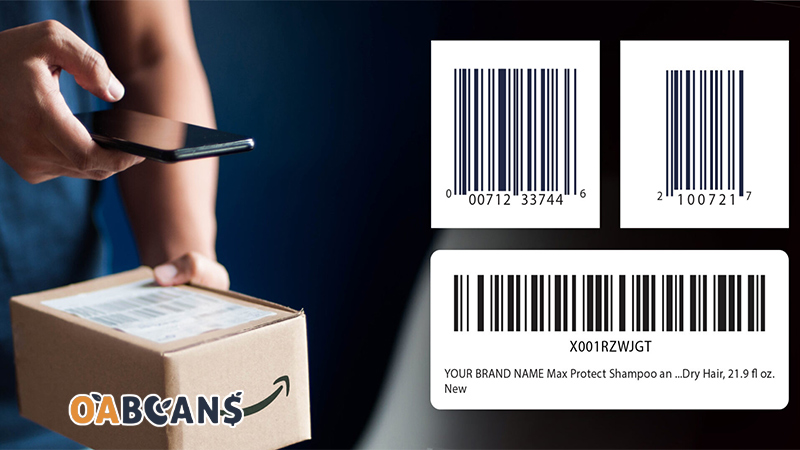
For FBA resellers, yes. Since March 31, 2026, Amazon no longer commingles FBA inventory, and sellers who aren’t the brand owner must apply an Amazon barcode (FNSKU) to every unit they send in, including online arbitrage, retail arbitrage and wholesale sellers. Inventory already in Amazon’s warehouses before that date was grandfathered.
Brand owners enrolled in Brand Registry (with the Brand Representative role) can usually keep using the manufacturer barcode for products with a valid GTIN. Products without a manufacturer barcode, or with a GTIN exemption, always need an Amazon barcode. If you only sell with FBM (you ship orders yourself), you don’t need FNSKU labels at all.
How to Create an FNSKU?
You don’t create an FNSKU manually: Amazon generates it automatically when you create an FBA offer (or convert an offer to Fulfilled by Amazon) and choose Amazon barcode as the barcode type. FBM-only offers have no FNSKU.
To look up an FNSKU, go to Inventory > Manage All Inventory in Seller Central. The FNSKU is shown with each FBA offer (you can also add it as a column in your inventory view or download it in an inventory report).
How to Print FNSKU Labels?
Finding and printing your products’ FNSKU labels is relatively easy. Here’s how you can do it:
- Log in to Seller Central and go to Inventory > Manage All Inventory.
- Tick the box next to the FBA offer you want labels for.
- Open the bulk action drop-down menu and choose “Print item labels”. (You can also print item labels while preparing a shipment in the Send to Amazon workflow.)
- Enter the number of labels, choose the label size that matches your label paper or thermal printer, and download the PDF.
- Print the labels and stick one on the outside packaging of each unit, covering the original barcode, before you ship to Amazon or your prep center.
How to Label Products with Amazon FNSKU Barcode?
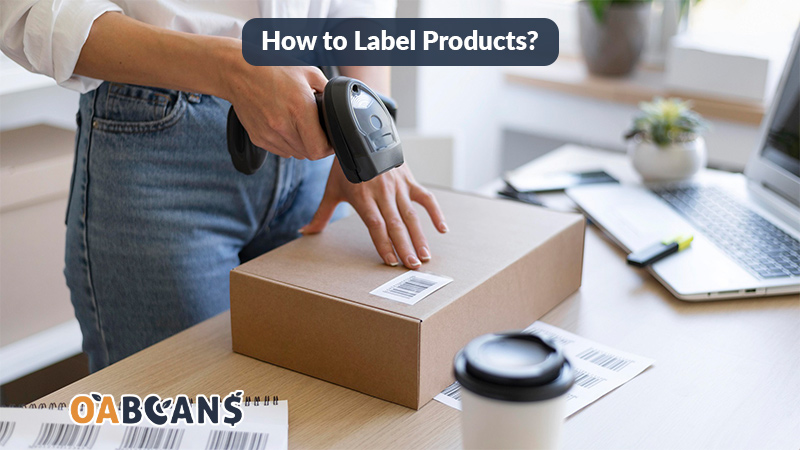
Every unit you send to an Amazon fulfillment center needs a scannable barcode. As a reseller, that means an FNSKU label on each unit (brand owners in Brand Registry can usually use the manufacturer barcode instead). Since Amazon no longer offers its own label service in the US, you have three options:
1. Label the products yourself
Print labels from Seller Central (from Manage All Inventory using “Print item labels”, or during the Send to Amazon workflow) on a thermal label printer or Amazon-approved label sheets, and stick one on each unit.
2. Use a prep center
Most online arbitrage sellers ship purchases straight to a third-party prep center, which inspects, preps and FNSKU-labels each unit before forwarding it to Amazon. See our guide to finding a prep center for online arbitrage.
3. Have your supplier apply the labels
Wholesale and private label sellers can send the label PDF to their supplier or manufacturer and have FNSKU labels applied (or printed on the packaging) before the goods ship.
FNSKU label requirements
- The label must be scannable, undamaged and placed on a flat outer surface of the unit (not over a seam or corner).
- Cover any other scannable barcode on the outside of the package (such as the UPC) so only the FNSKU can be scanned.
- Use removable labels so customers can peel them off, and make sure the label matches the exact product and condition you listed.
- Each set or bundle sold as one unit needs its own label, plus “Sold as set” packaging where Amazon requires it.
Final Thoughts
The Amazon FNSKU (Fulfillment Network Stock Keeping Unit) is the code Amazon uses to identify and track your units in its warehouses. If you only sell FBM, you don’t need it. If you sell with FBA as a reseller, FNSKU labels are now mandatory on every unit you send in, and Amazon no longer applies them for you in the US, so build labeling into your workflow or use a prep center.
FNSKU FAQ
What is the difference between FNSKU and ASIN?
The ASIN identifies the product listing and is shared by all sellers of that product. The FNSKU identifies your own units of that product in Amazon’s fulfillment network.
Where do I put the FNSKU label on a product?
On a flat outer surface of each unit’s packaging, covering the original UPC/EAN barcode so only the FNSKU can be scanned.
Can Amazon label my products for me?
Not in the US anymore. Amazon stopped offering its FBA prep and label service for shipments created from January 1, 2026. Units that arrive without required labels can be refused, returned or charged noncompliance fees, so label them yourself or use a prep center.
Is the FNSKU the same as a SKU?
No. The SKU is the internal code you choose for your own inventory. Amazon creates the FNSKU. You can read more in our guide to the Amazon ASIN number and how it compares with FNSKU, UPC and SKU.