


What is Amazon FBM?
Amazon FBM (Fulfillment by Merchant), also called merchant fulfilled, means you sell on Amazon but store, pack, and ship every order yourself or through your own third-party logistics (3PL) partner, instead of sending inventory to Amazon’s warehouses. You also handle customer service and returns for those orders.
In short: with FBM you pay Amazon its selling plan and referral fees, but no FBA fulfillment or storage fees. In exchange, you are responsible for fast, trackable delivery. Many sellers use FBM alongside FBA, especially for large, slow-moving, or hard-to-prep items.
How Does Amazon FBM Work?
With FBM, Amazon handles the storefront and payment, and you handle everything that happens after the customer clicks Buy. Here is the process step by step.
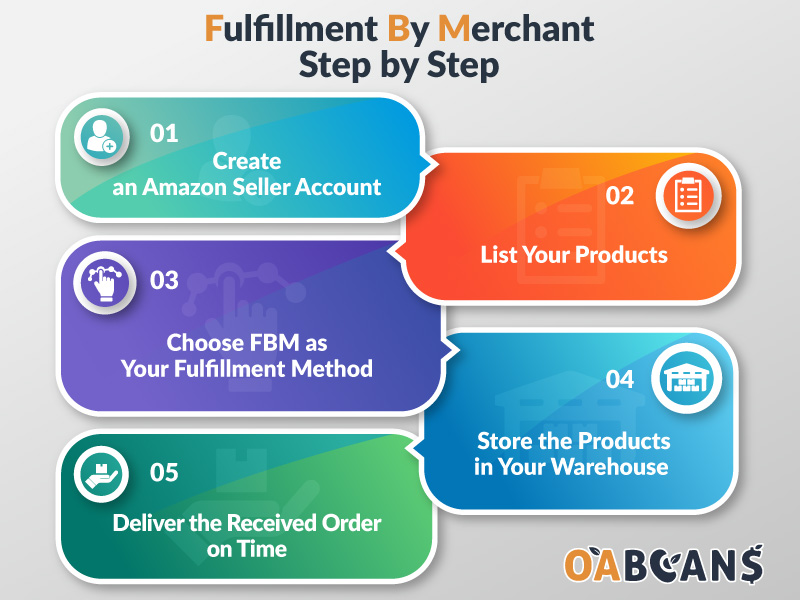
Here are the steps to start selling with Amazon FBM:
1) Initially, you need your business information as below to create an account in Amazon Seller Central.
- Business information (your business name, address, and contact information)
- Email address
- Credit card
- Phone number
- Tax ID (such as an SSN or EIN) and bank account details
- A return address for customer returns
2) With the above information, register in Seller Central and pick a selling plan: Individual ($0.99 per item sold) or Professional ($39.99 per month).
Read More: Amazon Individual vs. Professional Seller Plans
3) Next, list your products. Add your offer to an existing listing or create a new one, and set the fulfillment channel to Fulfilled by Merchant. Good images and accurate details help conversion.
4) Set up shipping. Create shipping templates with your handling time, regions, and rates, and choose reliable carriers. You can buy discounted, tracked labels through Amazon Buy Shipping or use your own carrier accounts. Compare the total cost with FBA fees so FBM actually protects your margin.
5) Store your inventory. Small sellers often start at home or in a small storage unit, while larger sellers use their own warehouse or a 3PL. Spreading inventory across more than one location can cut shipping zones and delivery times.
6) Ship every order on time with tracking. Amazon shows buyers a delivery date based on your handling and transit times, and it measures FBM sellers on key metrics: a late shipment rate under 4%, a pre-fulfillment cancel rate under 2.5%, and valid tracking on at least 95% of orders. Missing these targets can put your selling privileges at risk, so keep an eye on your Amazon account health.
When Should You Use Amazon FBM?
There is no one-size-fits-all answer. FBM usually makes the most sense when FBA fees, capacity limits, or prep requirements would eat your margin.
You can also use both methods at once, for example keeping fast sellers in FBA and using FBM as a backup when FBA stock runs out or when your FBA capacity limits are tight.
FBM is a good fit for:
- Low-volume products that would sit in FBA storage
- Low-margin products where FBA fees would wipe out the profit
- Exclusive products with low sales frequency
- Handmade products in your inventory
- Hard to ship products (oversized, fragile, or heavy items)
- Sellers with their own storage space or a small inventory
- Sellers with a 3PL or fulfillment service that is cheaper than Amazon FBA
Ultimate Guide About Amazon Freight Forwarder
Pros & Cons of FBM
With FBM you take on all of the fulfillment work, so weigh the advantages and disadvantages before you choose it.
Pros:
- No FBA prep, labeling, or inbound shipment requirements
- Have control over every aspect of the business
- No FBA fulfillment, storage, or capacity-related fees, so margins can be higher

- Freedom of running the business as desired
- Full visibility of your inventory, with no units lost or damaged in Amazon warehouses
- Less exposure to FBA fee increases, storage surcharges, and inbound delays
- Easier to sell oversized, heavy, or slow-moving items profitably
- You can add your own packaging and inserts (within Amazon policy)
- You can keep selling when Amazon restricts FBA inbound shipments or capacity
Cons:
- No Prime badge unless you qualify for Seller Fulfilled Prime, which can lower conversion and Buy Box share
- Strict shipping and tracking metrics you must meet every day
- More time spent on packing, shipping, and returns
- Shipping rates may be higher than Amazon’s discounted FBA rates
- Costs of warehousing and in-house fulfillment add up quickly
- Customer service and returns are your responsibility
Amazon FBM vs. FBA
The core difference is who stores and ships the product. With Fulfillment by Amazon (FBA), you send inventory to Amazon’s fulfillment centers. With Fulfillment by Merchant (FBM), inventory stays with you or your 3PL.
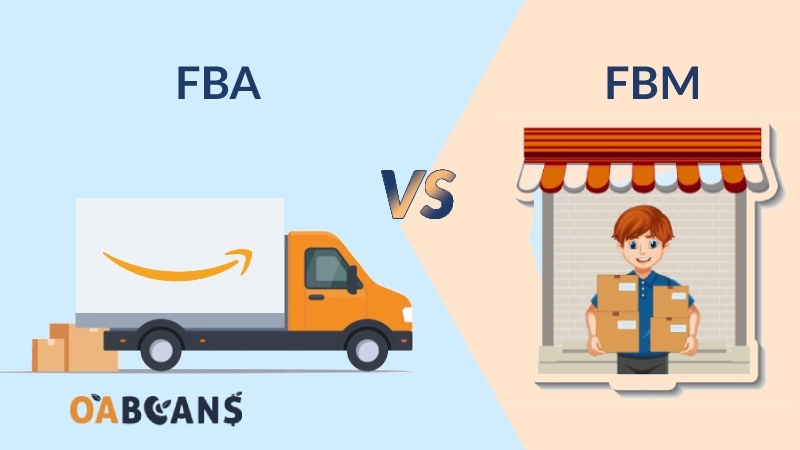
In FBA, Amazon handles picking, packing, shipping, customer service, and returns, and your offers automatically get the Prime badge with fast, free delivery for Prime members. You pay FBA fulfillment and storage fees for that service.
In FBM, shipping, customer support, returns, and every other part of order fulfillment are your responsibility, but you avoid FBA fees and keep full control of your inventory.
You can find more details here: Amazon FBA vs. FBM
Amazon FBM Fees
FBM sellers do not pay FBA fulfillment or storage fees, but they still pay Amazon’s selling fees plus their own shipping and packaging costs. As of 2026, the main costs are:
- Selling plan: the Professional plan costs $39.99 per month; the Individual plan has no monthly fee.
- Per-item fee: Individual sellers pay $0.99 per item sold; Professional sellers do not.
- Shipping and packaging: you pay for labels, boxes, and materials on every order. Amazon gives you a shipping credit on some categories, such as media.
- Referral fee: a percentage of the total sale price, including shipping. It is 15% in most categories (with a $0.30 minimum per item) and ranges from about 8% (for example, consumer electronics) up to 45% (Amazon device accessories).
- Closing fee: $1.80 per item for media categories such as books, music, DVDs, video, and software.
Amazon updates category referral rates from time to time, so check the current rates in Seller Central before you price a product. For a full, category-by-category breakdown and example calculations, read our guide to Amazon FBM fees, and compare them with Amazon FBA fees.
Is Amazon FBM Worth It?
FBM is worth it when it improves your margin without hurting sales. It often wins for large, heavy, or slow-selling products, where FBA fees and storage costs are high, and it is a smart backup when FBA stock runs out. If most of your sales depend on the Prime badge and you do not qualify for Seller Fulfilled Prime, FBA is usually the better choice for fast-moving items.
How Much Do Amazon FBM Sellers Make?
There is no typical number. Earnings depend on your products, margins, sales volume, and how efficiently you ship.
FBM sellers can usually launch faster than FBA sellers because there is no inbound shipment to prepare, and they keep more of each sale. For real seller income figures, see how much Amazon sellers make.
If you are just starting out, read our step-by-step guide on how to start an Amazon FBA business.
Final Thought
Amazon FBM takes more hands-on work, but it gives you full control over your inventory and costs, and it is an excellent backup for FBA. Start with a few products, track your shipping metrics closely, and compare your real costs with FBA before you scale.
Amazon FBM FAQ






11 replies on “Amazon FBM (Fulfillment by Merchant): Complete Guide for 2026”
Amazon FBA can help you garner positive reviews and improve your seller metrics, leading to more sales and revenue for your ecommerce business.
I love shopping on Amazon Marketplace – the selection is unbeatable!
Your site is a great source of inspiration for new ideas and strategies. I’ve tried several of your Amazon reselling tips and have seen real results!
Thanks to this site, I feel like I have a competitive edge in the world of Amazon online arbitrage.
The video content on your website is a great addition, providing a more engaging way for sellers to learn and absorb information.
I love your tips on managing Amazon inventory. You have a unique perspective on this topic.
Selling through Amazon’s platform provides retail arbitrage sellers with a secure and trusted payment system, ensuring smooth transactions.
The Amazon FBA program offers excellent seller protection. They handle returns and customer complaints, relieving me of any potential headaches.
The Amazon retail arbitrage community is vibrant and supportive, offering forums and groups where sellers can connect, share insights, and learn from each other.
One of the advantages of reselling on Amazon is the ability to leverage the trust and reputation of the Amazon brand. Customers feel confident buying from a trusted platform.
Amazon’s strong brand reputation and customer trust make it an ideal platform for retail arbitrage sellers, attracting buyers who value quality and reliability.