


Quick answer: AI arbitrage means using artificial intelligence (software, algorithms and automation) to find and act on price differences between markets faster than a person could. For Amazon resellers, that means AI-powered tools scan thousands of retail products, compare them with Amazon prices, fees and sales data, and flag the ones you can resell at a profit. The term is also used for AI trading bots in finance and for agencies that resell AI-powered services, and it’s a common hook for investment scams, so it pays to know which meaning you’re dealing with.
What Does Arbitrage Mean in Business?
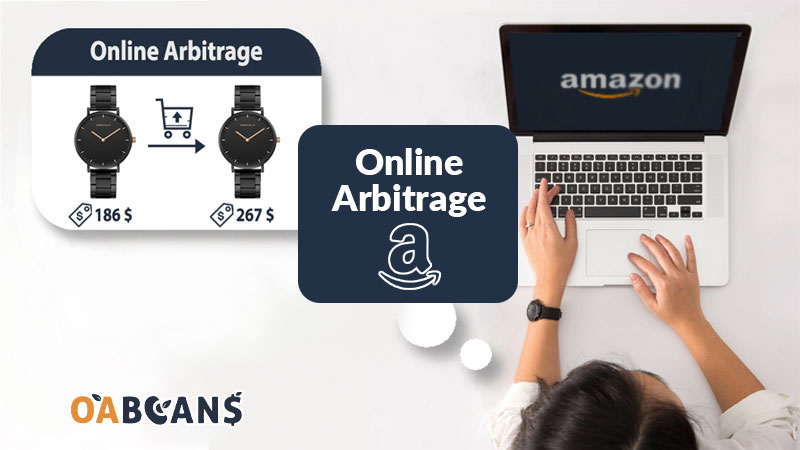
Arbitrage simply means buying something at a low price and selling it at a higher price in another market. In e-commerce, the classic example is retail arbitrage, where sellers buy discounted products in physical stores and resell them on platforms like Amazon or eBay. When the whole process happens online, it’s called online arbitrage: sellers buy cheaper products from retail websites and list them on Amazon to reach more customers.
But arbitrage isn’t limited to physical products. It also exists in financial markets. For example, traders use small price gaps to buy an asset at a cheaper rate and sell it at a higher one. This is common in stocks, forex, and crypto. Unlike product arbitrage, financial arbitrage often relies on algorithms and automation, since these price differences may only exist for a few seconds.
What is AI Arbitrage?

Artificial intelligence has become an inseparable part of our daily lives, helping us with tasks both big and small. In the world of business, one of its most exciting applications is AI arbitrage. This term refers to using AI tools, algorithms, and automation to identify profitable opportunities much faster than a human ever could.
Unlike traditional arbitrage, where people manually search for price gaps between markets, AI-powered software can scan thousands of products across many websites in seconds. A person might track a handful of items; software can monitor thousands at the same time and spot profitable gaps that would otherwise be missed. To learn about another online reselling model, read our guide What Is Digital Arbitrage?
What sets AI arbitrage apart is speed and scale. Sellers used to compare prices by hand or with simple spreadsheets; today most sourcing software uses automation and machine learning to filter products, estimate sales and calculate profit after fees. In short, AI arbitrage applies the old rule of “buy low, sell high” with modern automation, while you still make the final buying decisions.
Other Meanings of “AI Arbitrage”
You’ll see the term used in a few other ways online:
- AI agency (service) arbitrage: a business model where an agency or freelancer uses AI tools to deliver services such as content, chatbots, customer support or automation for less than it charges clients, and keeps the difference.
- AI trading arbitrage: trading bots that look for small price differences between exchanges in stocks, forex or crypto. These gaps are tiny and short-lived, and professional firms with very fast systems compete for them.
- AI product arbitrage: the meaning in this guide, using AI-powered tools to find physical products you can buy cheaply online or in stores and resell on Amazon at a profit.
How AI Arbitrage Works?
In this part, we’ll explain how AI arbitrage works and the steps it takes to help sellers and business owners save time and gain access to critical information.
Data Collection

The first step is data collection. AI sourcing tools scan retail websites such as Walmart, Target or Home Depot and match products to Amazon listings by UPC or title. For each match they pull prices, Amazon fees, the number of sellers, Best Sellers Rank and price history (often from Keepa). That gives you a real-time view of which items are cheaper in one store and could sell on Amazon at a profit, something no one could check by hand across thousands of listings.
Opportunity Detection
Next, the software filters the data to find profitable gaps. It compares the buy cost with the expected Amazon sale price, subtracts referral and FBA fees, and estimates ROI and monthly sales.
For example, if a product costs $40 at a retailer and sells for $80 on Amazon, the tool flags it, but it’s only a real opportunity if the numbers still work after fees, shipping and prep, and if the price is stable. Always confirm a deal yourself: check whether you’re allowed to sell the brand, how many sellers are on the listing and whether Amazon itself sells it. Learning how to use Keepa is the fastest way to double-check what a tool tells you.
Automation of Processes
AI and automation also help after you buy. Sellers use software to create listings, track inventory, plan restocks and adjust prices automatically with an Amazon repricer that reacts to competitors in real time. Amazon itself now offers generative AI tools in Seller Central that help sellers create product listings. Fully automatic buying is risky, though: a person should still review each purchase before money is spent.
Applications of AI Arbitrage
Now that you know how AI arbitrage works, here’s where it’s used. AI algorithms and automation have become common across industries, from e-commerce to financial trading and digital assets.
Below, we’ve prepared a table that highlights some of the major areas where AI arbitrage is making a big impact.
| Application | Examples & Tools | Who Benefits |
| E-commerce Arbitrage |
|
|
| Finance Arbitrage |
|
|
| Digital Assets Arbitrage |
|
|
Benefits of AI Arbitrage

The benefits of AI arbitrage are quite varied and valuable for sellers in different fields. But here, I’ll focus on the most important ones.
- The first key advantage is speed. AI can process and analyze huge amounts of information in a very short time. For example, it can scan thousands of products, checking details like price, sales history, and stock levels in just seconds.
- Another major benefit is accuracy. Software doesn’t get tired or make emotional decisions, and it applies the same math to every product, including referral fees, FBA fees and shipping costs. That reduces calculation mistakes, although you still need to verify product matches and restrictions.
- The third big advantage is scalability. A human arbitrageur can only track a limited number of products or platforms at once, but AI can monitor hundreds or even thousands simultaneously. This makes it much easier for growing businesses to manage larger workloads without needing a big team.
- Finally, these features can make your sourcing more profitable. Tools can scan around the clock and surface deals you’d never find manually, so you spend your time checking and buying instead of searching. Profit isn’t guaranteed, though; it still depends on what you buy and how fast it sells.
Risks and Challenges of AI Arbitrage
It is noticeable that alongside the benefits of AI arbitrage, there are also some risks and challenges that sellers should be aware of. Here, we show you some important issues you may face during your work.
Market saturation
One of the first challenges is competition; many other sellers are also using AI tools, which means your profit margins might not be very different from theirs.
Software costs and technical setup
Another challenge is the cost of AI arbitrage tools. Most advanced tools and bots require monthly or yearly subscriptions, which can be expensive. Some of these tools also need technical knowledge, which can be difficult for beginners to manage during the first months of use.
Compliance issues on platforms
A further risk is compliance with platform policies. Sometimes, AI tools may not recognize restricted brands or pricing rules. This can lead to warnings or even account suspension if you are selling on platforms like Amazon.
Dependency on data quality
Finally, AI is only as good as its data. Product matches can be wrong (a different size, color or pack count), prices change by the minute and sales estimates are estimates. Check every lead before you buy.
“AI arbitrage” investment scams
Be very careful with websites, apps or social media accounts that promise guaranteed daily returns from an “AI arbitrage” trading bot or platform. In January 2024 the US Commodity Futures Trading Commission (CFTC) warned investors that fraudsters use AI hype, including crypto arbitrage algorithms and trading bots, to promise huge returns, and pointed out that AI can’t predict the future or sudden market changes. Before you send money anywhere, check the company with your financial regulator, and treat guaranteed profits as a red flag. Product arbitrage on Amazon is different: you buy real inventory, and your profit depends on your own buying decisions.
The Future of AI Arbitrage
AI is becoming a standard part of e-commerce sourcing. Tools that once just compared prices now estimate sales, check fees and restrictions, and score deals automatically, and Amazon keeps adding AI features for sellers inside Seller Central.
The catch is that when everyone uses the same tools, the easy deals get crowded quickly. The sellers who do best combine AI automation with human judgment: software finds the candidates, and people decide which ones are worth buying based on price history, competition and their own experience.
Final Thoughts
One of the most profitable online businesses today is arbitrage. Traditionally, sellers buy low-cost products and resell them on platforms like Amazon at higher prices. Now, with the integration of AI, sellers can find opportunities across thousands of markets more quickly and effectively.
AI arbitrage is the natural next step for online arbitrage. Sellers who use AI-powered tools to research and verify deals can cover far more products than those working by hand, but tools don’t replace judgment. If you’d rather not run sourcing software yourself, our online arbitrage leads give you products that have already been researched, so you can focus on checking and buying.
FAQs
What is AI arbitrage in simple terms?
It’s using AI software to find price differences you can profit from, for example a product that costs less at an online retailer than it sells for on Amazon, much faster than you could find them yourself.
Is AI arbitrage legal?
Yes. Buying products and reselling them is generally legal as long as the goods are authentic, you follow the marketplace’s rules and you have approval for any restricted brands or categories. See is online arbitrage legal? for details.
Is AI arbitrage a scam?
The concept isn’t, but many “AI arbitrage” investment platforms and trading bots that promise fixed daily returns are. Regulators such as the CFTC have warned about these schemes. Real product arbitrage involves buying actual inventory and carries normal business risk, with no guaranteed returns.
Can beginners use AI arbitrage tools?
Yes. Most sourcing tools are built for non-technical sellers, and the main skill to learn is checking a deal properly: profit after fees, sales rank, price history and selling restrictions.
How much money do I need to start?
Many sellers start online arbitrage with a few hundred to a few thousand dollars for inventory, plus the Amazon Professional plan ($39.99/month in the US) and any tool or leads subscriptions. Start small and reinvest profits.
What are the best AI arbitrage tools?
For Amazon product arbitrage, popular options include Tactical Arbitrage and Source Mogul for scanning retailers, BuyBotPro and SellerAmp for analyzing deals, and Keepa for price history. Compare more options in our list of the best online arbitrage tools.
Is AI arbitrage still profitable in 2026?
It can be, but margins are tighter because more sellers use the same tools. Profit comes from verifying deals carefully, buying in sensible quantities and selling products other sellers miss.







11 replies on “What Is AI Arbitrage? Meaning, How It Works & Best Tools”
The constant learning and adaptation required in retail arbitrage keep the business dynamic and engaging, as you stay up to date with market trends and adjust your sourcing strategies accordingly.
Selling through Amazon FBA provides a level of trust and credibility to your business, as customers associate it with the reliability of Amazon.
The ability to offer Amazon’s hassle-free returns policy through FBA reassures customers and encourages them to make purchases with confidence.
With Amazon’s fulfillment network, resellers can expand their reach and offer products to customers across different regions.
Reselling on Amazon provides a fantastic opportunity to turn unused or unwanted items into a profitable business venture.
The FBA program streamlines inventory management, ensuring you have the right products in stock at the right time to meet customer demand.
The scalability of reselling on Amazon allows sellers to start small and gradually grow their business as they gain experience and profits.
Amazon’s fulfillment options, such as FBA, provide reliable and efficient shipping solutions for your retail arbitrage business.
Amazon retail arbitrage is an exciting and profitable strategy that allows you to find discounted products in retail stores and resell them on Amazon for a profit.
By optimizing product listings with effective keywords and compelling descriptions, retail arbitrage sellers can improve the discoverability and conversion rates of their products.
The FBA program provides sellers with access to Amazon’s advanced fulfillment technology, ensuring accurate and timely order processing.