


What is Amazon FBM?
Amazon FBM is also known as Amazon Merchant Fulfilled Network (MFN). In this fulfillment method, Amazon sellers are responsible for fulfilling the purchased products on Amazon. Sellers can manage FBM directly or become a partner with a third-party logistics service provider. Indeed, the merchant should fulfill the whole process from inventory storage, picking, packing, shipping, return, and customer service.

Newbies can only use this method to start their business on Amazon because setting up FBA takes time, and sellers need a few approvals for their Amazon FBA Business. Besides, they require to demonstrate inventory turnover. However, small businesses fulfill orders by the FBM method because the Amazon FBM costs are more reasonable for their business.
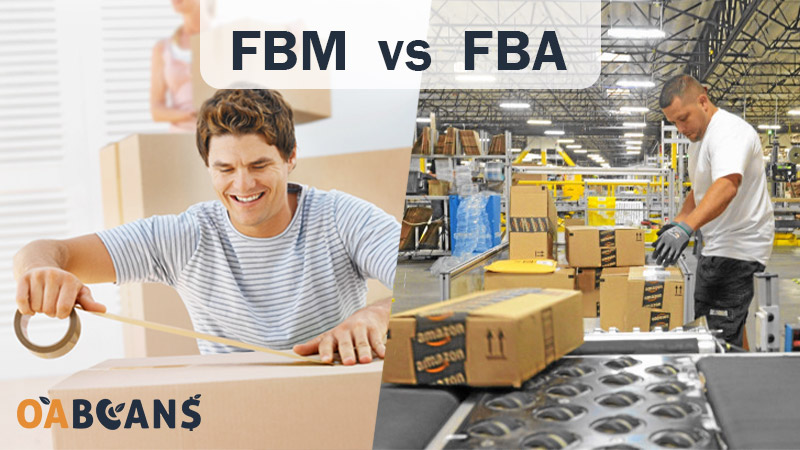
What is the Difference Between Amazon FBA & FBM?
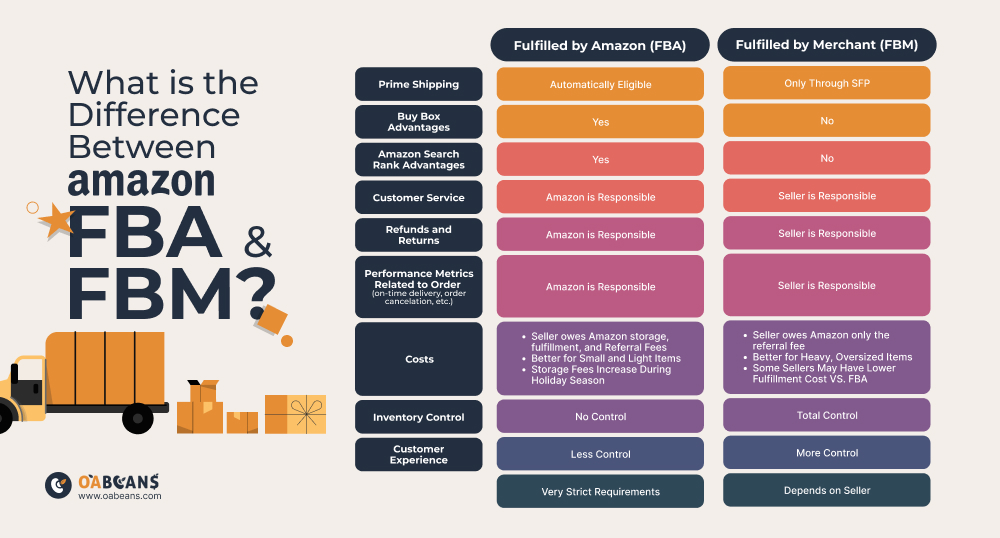
Fulfillment by Amazon (FBA) is a fulfillment method in which Amazon has the whole responsibility for fulfilling products. A seller or a seller’s supplier sends the items directly to Amazon’s warehouse, and Amazon stores this inventory, picks, packs, and ships the sold product directly to the customer.
If customers subscribe to the Amazon Prime service, the shipping time would be only two days. Return and customer support are the other services that Amazon provides.
On the other hand, is Amazon FBM. Here, sellers use the Amazon platform to list their products on Amazon. But the merchant has to manage the rest, from storage, pick&pack, and shipment. Even return, and customer service is their responsibilities.
This table provides a detailed FBM vs FBA comparison for 2025 that is useful for every seller:
|
|
Fulfilled by Amazon (FBA) |
Fulfilled by Merchant(FBM) |
|
Prime Shipping |
Automatically Eligible |
Only Through SFP |
|
Buy Box Advantages |
Yes |
No |
|
Amazon Search Rank Advantages |
Yes |
No |
|
Customer Service |
Amazon is Responsible |
Seller is Responsible |
|
Refunds and Returns |
Amazon is Responsible |
Seller is Responsible |
|
Performance Metrics Related to Order (on-time delivery, order cancelation, etc.) |
Amazon is Responsible |
Seller is Responsible |
|
Costs |
-Seller owes Amazon storage, fulfillment, and Referral Fees -Better for Small and Light Items Storage Fees Increase During Holiday Season |
-Seller owes Amazon only the referral fee -Better for Heavy, Oversized Items -Some Sellers May Have Lower Fulfillment Cost VS. FBA |
|
Inventory Control |
No Control |
Total Control |
|
Customer Experience |
Less Control |
More Control |
|
|
Very Strict Requirements |
Depends on Seller |
Amazon FBA VS. FBM ; Which One is Better for You?
What Are Amazon FBM Fees?
When sellers decide to ship the products by themselves, they will incur some costs. These FBM charges depend on shipping and delivery options and vary from seller to seller.

Amazon FBM Shipping Fees
Your Fulfillment by Merchant costs in 2025 vary depending on the type of product you purchase. Every single item has a specific shipping fee, so you may charge more if buying multiple products from a seller. American customers have to pay according to the shipping rate listed below tables for domestic and international shipments:
|
|
Domestic Standard* |
Domestic Expedited* |
Domestic Two-Day |
Domestic One-Day |
|
(4 – 14 business days**) |
(2 – 6 business days**) |
(2 business days) |
(1 business day) |
|
|
Books |
$3.99 |
$6.99 |
$14.95 |
$19.99 |
|
CDs, Cassettes, Vinyl |
$3.99 |
$6.19 |
$14.95 |
$19.99 |
|
VHS Videotapes |
$3.99 |
$6.19 |
$14.95 |
$19.99 |
|
DVDs and Blu-ray |
$3.99 |
$6.19 |
$14.95 |
$19.99 |
|
Video Games |
$3.99 |
$6.99 |
Not available |
Not available |
|
Software & Computer Games |
$3.99 |
$6.99 |
Not available |
Not available |
|
Camera & Photo |
$4.49 + $0.50/lb. |
$6.49 + $0.99/lb. |
Not available |
Not available |
|
Tools & Hardware |
$4.49 + $0.50/lb. |
$6.49 + $0.99/lb. |
Not available |
Not available |
|
Kitchen & Housewares |
$4.49 + $0.50/lb. |
$6.49 + $0.99/lb. |
Not available |
Not available |
|
Computer |
$4.49 + $0.50/lb. |
$6.49 + $0.99/lb. |
Not available |
Not available |
|
Outdoor Living |
$4.49 + $0.50/lb. |
$6.49 + $0.99/lb. |
Not available |
Not available |
|
Electronics |
$4.49 + $0.50/lb. |
$6.49 + $0.99/lb. |
Not available |
Not available |
|
Sports & Outdoors |
$4.49 + $0.50/lb. |
$6.49 + $0.99/lb. |
Not available |
Not available |
|
Cell Phones & Service |
$4.49 + $0.50/lb. |
$6.49 + $0.99/lb. |
Not available |
Not available |
|
Musical Instruments |
$4.49 + $0.50/lb. |
$6.49 + $0.99/lb. |
Not available |
Not available |
|
Office Products |
$4.49 + $0.50/lb. |
$6.49 + $0.99/lb. |
Not available |
Not available |
|
Toy & Baby |
$4.49 + $0.50/lb. |
$6.49 + $0.99/lb. |
Not available |
Not available |
|
Independent Design items |
FREE |
$6.49 + $0.99/lb. |
Not available |
Not available |
|
Everything Else |
$4.49 + $0.50/lb. |
$6.49 + $0.99/lb. |
Not available |
Not available |
* Includes APO, FPO, and U.S. Protectorate addresses.
** Some sellers offer reduced transit times when shipping orders. Please see the seller’s policies for more information.
|
|
International Standard |
International Expedited |
|
|
(3 – 6 weeks) |
(3 – 7 business days) |
|
Books |
$16.95 up to 1lb. $24.95 over 1 lb. |
$46.50 |
|
CDs, Cassettes, Vinyl |
$14.95 |
$46.50 |
|
VHS Videotapes |
$14.95 |
$46.50 |
|
DVDs |
$14.95 |
$46.50 |
Note: The seller themselves set the shipping charges for non-media products delivered outside the Continental United States. Please see the rates posted in the seller’s shipping policies.
To Know All the Details About Amazon FBA Fees & Costs, Click Here!
Who pays for shipping Amazon FBM?
In the FBM method, the customer/seller must also pay the shipping fees.
Amazon FBM Selling Fees
- Refund Administration Fee:
When a customer returns a product and asks for a refund, Amazon gives Amazon keeps a portion of the referral fee you originally paid, but it keeps a small part of it. This is called the refund administration fee, and it’s about 20% of the referral fee, with a maximum of $5. For example, if your referral fee was $10 , Amazon will keep $2 and return the remaining $8 to you.
- High-Volume Listing Fee:
Most sellers don’t need to pay to list products on Amazon. But if a seller has a huge number of listings, for example, over 100,000 active SKUs, Amazon charges a small fee. This fee is about $0.001 per SKU per month beyond that limit.
Be aware that in 2025, this threshold has been increased in some markets. For example, up to 2 million listings may now be allowed before the fee applies.
- Closing Fee for Media Products:
If you sell media products such as DVDs, books, music, or video games, Amazon charges an additional $1.80 per sale. This fee is on top of the usual referral fee. So if you sell a book, you’ll need to pay both the referral fee and this fixed closing fee.
- Rental Book Service Fee:
If you rent books to students through Amazon’s rental program, you’ll need to pay around $5 per rental. This fee is for using Amazon’s rental service, and it only applies if you participate in the textbook rental program.
Other Fees
- Closing Fees: $1.80 per sale (Books, DVDs, Music, Software, Video Games & Accessories).
- High Volume Listing Fee : $0.001/SKU/month (for large catalogs).
- Rental Book Service Fees
- Refund Administration Fees
Amazon’s 2025 Strategy Shift
It is important for all sellers to stay informed about the Amazon seller fees UK 2025 updates. For that reason, we have prepared a table to showcase the trends and shifts in fees and policies in Amazon’s strategy from 2024 to 2025.For instance, you can see the FBM vs. FBA comparison for 2025 in the table, and you might consider adjusting some of your approaches based on these or other changes.
|
Category |
Policy Update |
Details |
|
Cost-Related Changes |
Fee Freeze |
No increases to referral or FBA logistics fees in 2025. No new fee types will be introduced. |
|
FBA Placement Discounts |
– $0.58 average reduction per large item for single-warehouse inbound placement – Waived fees for up to 100 new ASIN units (Dec 2024–Mar 2025) |
|
|
Return to Off-Peak Rates |
FBA fulfilment fees revert to 2024 off-peak rates after 14 January 2025 (end of holiday season peak rates). |
|
|
Seller Incentives |
New Seller Support |
– 10% rebate for Brand Registry sellers – Credits: $200 (Vine) |
|
Fulfilment Discounts |
– 10% off fulfilment on first 100 Multi-Channel Fulfilment (MCF) units |
|
|
Operational Updates |
Product Title Rules |
New standardised title guidelines planned (details pending). |
|
FBA Inventory Payments |
New reimbursement processes |
|
|
Advertising Policies |
Stricter ad guidelines for transparency |
|
|
Performance Management |
Seller Rating Overhaul |
Emphasis on quick dispute resolution, reliable shipping, and fast customer response. |
|
Financial Support |
Flexible Funding Options |
Revenue-based financing via partners like Onramp Funds |
|
Tool Improvements |
Fee Calculator Enhancements |
Improved fee preview and shipment cost estimator tools to aid decision-making. |
Amazon’s 2025 Refund Policy Changes
Some professional sources, including GetIDA, Incrementum Digital and Amazon forums, say that starting in March 2025, Amazon will change its refund policy for lost or damaged FBA inventory. Instead of refunding based on the item’s sale price, Amazon will only reimburse sellers based on the manufacturing cost. For example, if your product sells for $40 but only costs $6 to make, you’ll only get around $6 back, not $40.
- Why is this important?
If you haven’t submitted the real manufacturing cost to Amazon, they’ll estimate it themselves and it might be much lower than the actual amount.
To help fix this, Amazon has introduced a new tool in Seller Central called “Manage Your Manufacturing Costs.” You can use this tool to upload your true cost per product, including shipping, packaging, and any other expenses. If you skip this step, you may receive far less than you should when products are lost or damaged.
- What should sellers do?
Sellers in 2025 must track their product costs carefully, submit accurate cost data to Amazon, and keep all receipts or invoices. It’s also important to reduce warehouse errors by using good packaging and lowering return rates.
Seller Survival Guide: Get Ready for Amazon’s 2025 FBA Refund Policy Changes
One important thing sellers should know is that big changes are coming to Amazon’s FBA refund policy in 2025. You need to take action to protect your profits. In this guide, we outline a few key steps to help you stay prepared for the new policy.
- Use Tools to Audit and Recover Past Fee
Check your Amazon account for missed refunds or fee errors from the last 18 months. You can use tools like GetIDA or Refund Genie to automatically find and fix those issues.
- Submit Refund Claims Before March 2025
If Amazon lost or damaged your FBA inventory in 2024 or early 2025, the best time to submit your refund claims is before March 10. After that date, Amazon will only pay based on your product’s cost, so this is your last chance to get full refunds under the old policy.
- Update Product Costs in Seller Central
Go to Amazon’s new Manage Your Manufacturing Costs section and enter your actual product costs, including shipping, packaging, and materials. This will ensure you get accurate refunds if your inventory is lost or damaged after the 2025 policy changes.
- Review Your FBA vs. FBM Strategy
Take a closer look at your product line and decide whether FBA is still the best option. For expensive or low-margin items, switching to FBM might be a smarter move. A hybrid strategy could also work well.
- Stay Updated on Amazon Policy Changes
Amazon changes its policies often. Follow the latest updates in Seller News and check your email regularly so you’re always one step ahead.
Which Fulfillment Method Is Right for You in 2025?
Before pick one method, it is important to have complete information about FBM and FBA and their differences. The first main difference is control. If you choose FBM, you’ll have full control over packaging, storage, and shipping. This lets you manage your own branding and logistics, but this control comes with more responsibility. On the other hand, if you choose FBA, Amazon takes care of everything, including packing, shipping, returns, and customer support.
Another big difference is Prime visibility and Buy Box. FBA products are automatically eligible for Amazon Prime and get faster shipping. They also have a higher chance of winning the Buy Box, which is key to boosting your sales and product ranking. FBM sellers don’t get the Prime badge unless they qualify for the strict Seller-Fulfilled Prime program.
So, which one is better for you? The answer depends on your goals, budget, and product type. If you sell small, fast-moving items, like phone accessories or cosmetics, FBA can be a great choice. Yes, it has higher fees, but fast shipping and Prime access can increase your sales.
In contrast, if you sell heavy or slow-moving products like furniture or gym equipment, FBM might be better. It gives you more control and can save money on storage and shipping.
|
Scenario |
FBM |
FBA |
|
Lightweight Product |
Lower shipping cost |
Higher fees |
|
full handling responsibility |
fast Prime shipping |
|
|
no Prime badge |
better Buy Box chances |
|
|
High-Value Product |
Full control |
Higher fees |
|
lower storage cost |
safer handling |
|
|
must ensure secure packaging
|
Prime trust |
|
|
easy returns |
||
|
Fast-Moving Product |
Harder to scale |
Scalable |
|
needs staff and inventory management |
Prime shipping |
|
|
better customer experience |
||
|
higher storage cost |
FAQ
-
How can FBM sellers accurately estimate total shipping costs before listing a product?
Use carrier rate calculators with package size, weight, and destination, then compare against Amazon’s shipping templates. Always include packaging, labels, and fuel surcharges too. -
What types of products typically become unprofitable under FBM due to hidden fees?
Heavy, oversized, fragile, or low-priced items often lose margin because shipping, packaging, and return costs exceed their selling price or expected ROI. -
How can FBM sellers reduce return-related expenses on Amazon?
Provide detailed product pages, accurate measurements, clear images, and proper packaging. Many FBM sellers also use return-inspection services to salvage resaleable inventory. -
When is switching a product from FBM to FBA more cost-effective?
When a product has fast sales velocity, low return rates, standard-size dimensions, and stable margins, these are conditions that make FBA’s lower per-unit shipping more profitable. -
How can FBM sellers prevent losing the buy box due to higher shipping fees?
Optimize shipping templates, use regional rate carriers, offer free or reduced shipping where possible, and maintain strong seller metrics to stay competitive despite FBM shipping costs.








11 responses to “Amazon FBM Fees & Costs [2025 Update]”
The deals for Amazon Marketplace members available through Amazon Prime Early Access are a great way to snag deals before they sell out.
I particularly appreciate the way your website tackles more advanced topics such as sourcing and pricing strategies. It’s a testament to your deep understanding and experience in the field.
I appreciate the diversity of products available on Amazon Marketplace from small businesses and independent sellers.
Overall, your website is a must-read for anyone looking to achieve success on Amazon Marketplace. Keep up the great work!
Your website offers practical and actionable advice for Amazon FBA sellers, with tips on everything from keyword research to customer service.
Your website is comprehensive and covers all aspects of Amazon reselling business, from product research and sourcing to selling and customer service. I appreciate the attention to detail and thoroughness of your content.
By engaging in retail arbitrage, you can expand your sourcing opportunities beyond online platforms and tap into the vast product selection available offline.
The convenience of selling on Amazon means you can manage your reselling business from anywhere, whether it’s from the comfort of your home or while traveling.
The thrill of sourcing and flipping items for a profit on Amazon is not only financially rewarding but also environmentally conscious, as it promotes reuse and reduces waste.
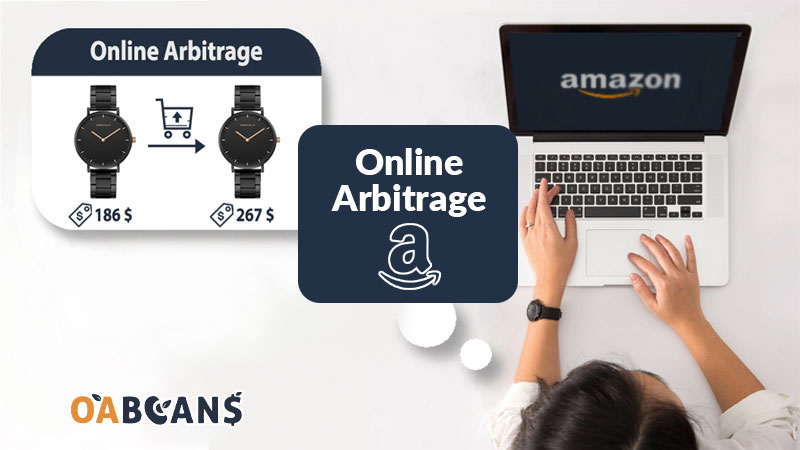
One of the advantages of Amazon online arbitrage is the ability to leverage the power of Amazon’s marketplace and customer base. It provides instant access to a wide audience.
Retail arbitrage allows you to take advantage of seasonal trends, clearance sales, and promotional offers in retail stores, maximizing your profit potential during peak buying periods.