


When you start your Amazon FBA business, you usually have limited capital and wish to grow your business. As you grow your business on FBA, rising demand could be amazing. But little by little, there is no more room in the garage/basement/rooftop deck. You and your family will receive your wares, unbox them, inspect for damages, prep, pack, bundle, and ship it all. You can’t meet demands at some points anymore and must trade your money for your time. It’s not an easy decision because we initially sold our time in exchange for the money saved.
Sometimes your business has grown enough that you can hire a team to handle prep and packaging. But more often, hiring is not efficient at this stage, and the better option is to work with a prep center.
An Amazon FBA prep center is a third-party warehouse that receives your inventory, inspects it, preps and labels it to Amazon’s requirements, and ships it to Amazon fulfillment centers. For a fee (often charged per unit), it does everything you and your family used to do at home. Using a prep center frees up your time, space in your home, and energy for you to use on profitable tasks such as sourcing.
Why Prep Centers Matter More in 2026
Amazon stopped offering its own FBA prep and item-labeling services in the US on January 1, 2026. Sellers are now fully responsible for bagging, bubble wrap, unique item labels, and carton prep, and inventory that arrives without proper prep risks rejection, delays, or extra fees. For most online arbitrage sellers, that makes choosing the right third-party prep center one of the most important operational decisions in the business.
Broken goods, delayed orders, or damaged packaging can quickly result in damage to your reputation because customers leave negative comments. You are offloading the work to someone else. So, your reputation and business depend on your chosen prep center.
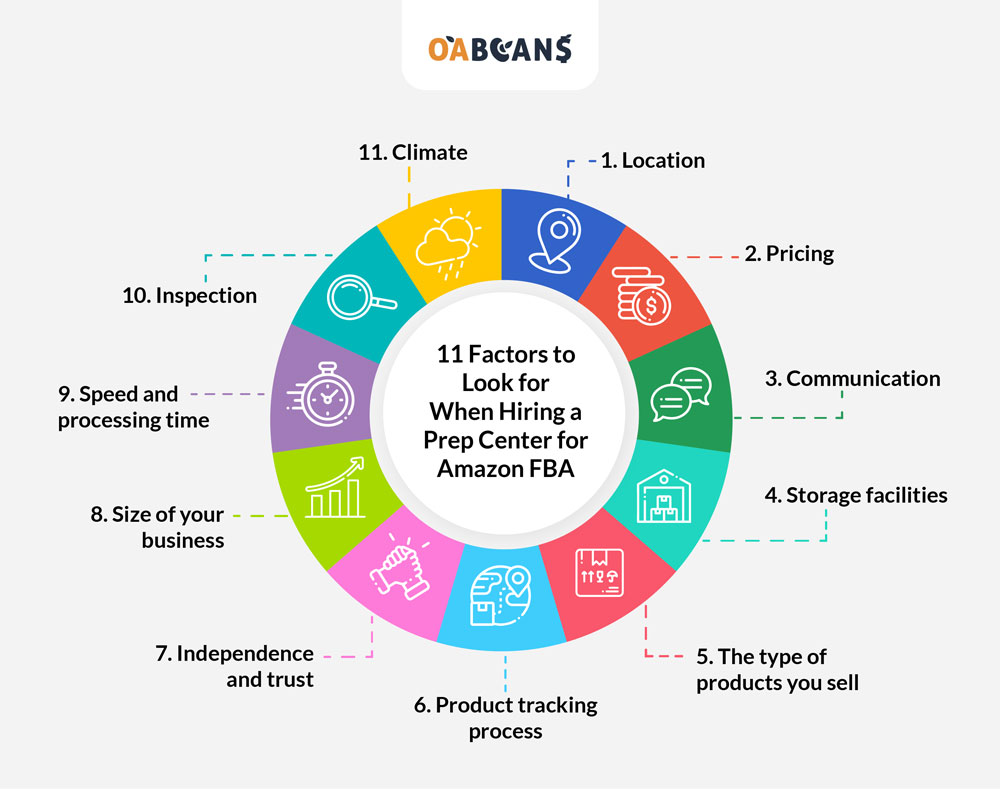
In this post, I will explain how you go about finding a prep center to help you decide.
1. Location

The location is, in many cases, the most critical factor. Because it significantly impacts how much you can save by using one.
Before choosing a prep center, you should answer a few questions about its location:
Where is the prep center located? West coast? Mid- America? Is it in a sales-tax-free state?
Don’t choose a prep center only for being close to one Amazon fulfillment center, though. Amazon assigns the destination warehouses for each shipment, and depending on the inbound placement option you choose in Send to Amazon (for example, fewer destinations versus Amazon-optimized splits), you may pay an inbound placement fee. Ask your prep center which placement options it uses and how it passes on those costs.
Sales tax is the other big location factor. When you buy inventory for online arbitrage, retailers usually charge sales tax based on the shipping address unless you use a valid resale certificate they accept. Shipping to a prep center in a state without a statewide sales tax can lower your costs when a retailer won’t honor your exemption.
Five states have no statewide sales tax: Alaska, Delaware, Montana, New Hampshire, and Oregon (Alaska allows local sales taxes, so check the prep center’s city). Elsewhere, statewide rates go up to 7.25% before local taxes, so even a prep center in a lower-tax state can make a difference to your margins. Our Amazon FBA sales tax guide explains the basics.
2. Pricing
One of the essential concerns for sellers when choosing an FBA prep service is the price. It doesn’t mean that the cheapest solution always is the best. If a prep center processes a thousand items per week for you and only charges a fraction of the competition is a bad sign.
The first question you must ask is whether the company will charge monthly or per item and what other charges may be involved.
Center A will charge for the label, polybag, and packing; if your product needs bubble wrap, they charge extra. But Center B has a monthly charge regardless of what your items need. A monthly charge suits sellers with large orders, whereas the per-item charge is better for low-volume sellers.
Prep fees are rarely included in the ROI figures shown by sourcing tools. If you buy deals from an online arbitrage leads list, add your per-unit prep cost (plus inbound shipping) to each deal and recalculate ROI before you buy. Typical line items to ask about are receiving, labeling, polybagging, bubble wrap, bundling, storage, and outbound shipping to Amazon.
3. Communication
Working with a company that respects you and is available whenever you need them is enjoyable.
A quick response via email or answering your calls is a good sign. If you need information and have requested it and it took several weeks for an initial response, it means you’re not important to this prep center. If any problem happens in shipping your items to the Amazon fulfillment center, an unresponsive prep center is the last thing you want to handle!
4. Storage facilities
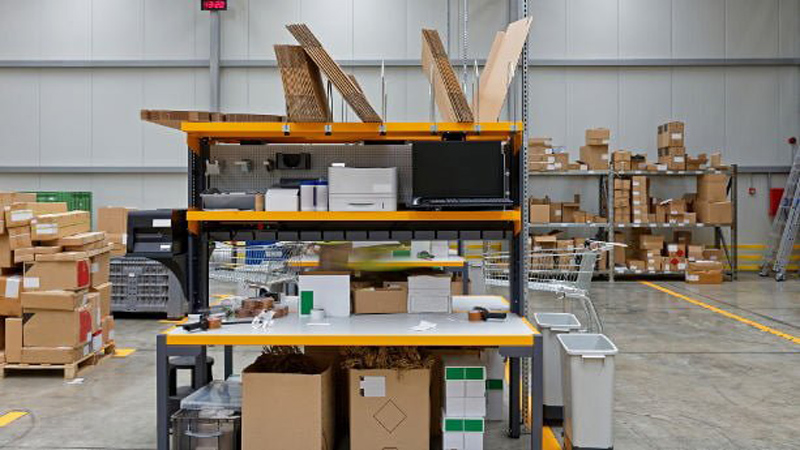
While an FBA prep center’s first job is to get your wares ready to be sent to FBA, more and more sellers are using prep centers to store their wares. Some but not all prep centers can store your goods for a while. If you supply your goods for a while, choose the prep centers that offer this ability.
There are two main reasons why sellers want to store their goods in prep centers. First of all, it can be cheaper than storing the goods at a Fulfillment Center. Secondly, it reduces risk: if your account is suspended, inventory already at Amazon can be stuck in the fulfillment center, while stock at a prep center stays under your control. It also helps you work within Amazon’s FBA capacity limits.
If you want to store your goods in a prep center, ask them about the security of their warehousing and their insurance against fire or theft of your stocks while they are holding them. Also read all about the amazon storage limits to find out what you are facing.
5. The type of products you sell
Some prep centers are more equipped for special products. For example, if you Sell Books on Amazon, you can find prep centers equipped enough to handle special prep requirements.
6. Product tracking process
Choose a prep center that offers you product tracking software. It helps you to have different levels of communication about your shipped products. You can find out exactly where your goods are; you can see which ones have been shipped out, what has been received, or any communication.
So try to choose a prep center that meets your demands about the product tracking process.
7. Independence and trust
When you work with a prep center, you share your business information with a 3rd party, so it’s important to trust your prep center.
Also, your prep center should be independent. Imagine that your prep center also is an online arbitrage seller. They can see what you are sourcing and maybe start sourcing the same items.
Current and former Amazon sellers run some prep centers. So, they have a great experience with the process of shipping to FBA, and it values a lot.
Check the reviews about the prep centers and read the customers’ different comments to evaluate if you can trust them. The way they answer the customers can help you in making a decision.
8. Size of your business
If you were a new seller, you wouldn’t have many goods to ship. Some prep centers have a minimum shipment size that is not good enough for shipping only 10 items.
As a small seller, you need to look for a prep center with no cost restrictive minimum.
On the other hand, a large seller ships many items at a time. Also, maybe you are shipping products by truckload. So you need to ensure your prep center can handle this type of volume. If they are not ready to receive this much of goods, they can damage your business.
There is a wide range of prep centers, and you shouldn’t have a problem finding one that is fit for the size of your business.
Know More About Amazon FBA Product Sourcing
9. Speed and processing time
A key factor in deciding on an FBA prep service is how long it needs to process your goods. Your customers are expecting delivery of their goods within a certain time frame. Processing time can vary from 24 hours to one month. Usually, prep centers are upfront with their processing time. Sometimes they offer guaranteed turnaround time.
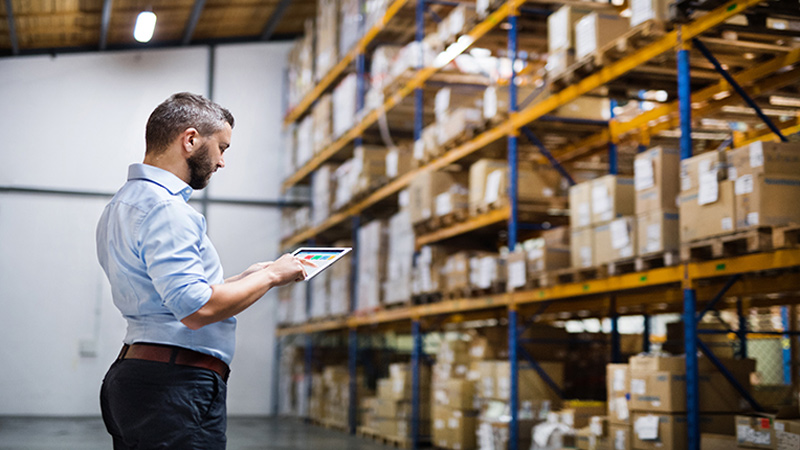
If this information is not available, ask for it and make sure you know the consequences if the guarantees are not met.
The normal processing time for medium-sized shipments is about three days. Smaller orders can take less and larger order takes longer. If the prep center needs a significant amount of time regardless of the size, it is a prep center overloaded. It’s important to balance speed and cost.
10. Inspection
For anybody serious about online arbitrage, choosing an inspection company and reliable prep is important to ensure that your customers receive good quality and service. Some prep centers offer an inspection service. It doesn’t replace product inspection at the manufacturer’s factory but can supplement it.
In online arbitrage, retailers sometimes send the wrong variation, damaged or opened boxes, items with short expiration dates, or missing units. A good prep center checks every unit against your order, flags problems with photos, and holds problem items so you can return them to the retailer instead of risking customer complaints or Amazon inspection issues.
11. Climate
If you are ordering some kinds of items like food, you should know about the prep center warehousing climate. Temperature and humidity are crucial factors for some types of items.
If you sell these kinds of products, ensure your prep center is suitable.
Where to Find Amazon Prep Centers in the US
There are hundreds of FBA prep centers in the US, from small family-run operations to large multi-warehouse 3PLs, and they open, close, and change prices often. Instead of relying on an old “best of” list, build a shortlist from these sources:
- Amazon’s Service Provider Network (SPN): In Seller Central, the SPN lists third-party service providers, including logistics and prep providers, along with their reviews.
- Seller communities: Facebook groups such as the OABeans Facebook group are a good place to ask experienced OA sellers which prep centers they use and why.
- Search by state: Search for “FBA prep center” plus a no-sales-tax state (for example Oregon or Delaware) or your region, then check Google reviews and recent seller feedback.
Before sending a large shipment, test each shortlisted prep center with a small order. Check how quickly they receive and ship, how accurate their labeling is, and how they communicate when something goes wrong.
Questions to Ask a Prep Center
- What is your full price list per unit, and are there monthly minimums or setup fees?
- What is your average turnaround time from receiving to shipping to Amazon?
- Which marketplaces, product types, and prep types (bundles, hazmat, expiration-dated items) do you handle?
- How do you report damaged, missing, or wrong items from retailers?
- Do you offer storage, returns processing, or merchant-fulfilled (FBM) shipping?
- Are you insured, and do you sell on Amazon yourselves?
Final Thoughts
With Amazon no longer prepping FBA inventory in the US, a reliable prep center is a core part of any online arbitrage business. Compare location and sales tax, all-in pricing, speed, communication, and trust, test with small shipments, and build your prep costs into every deal’s ROI. Once your prep is running smoothly, you can focus on what grows the business: sourcing more profitable products.







2 replies on “How to Find and Choose an Amazon FBA Prep Center (2026 Guide)”
crap i am just trying to learn to sell on amazon because we could use the money to start our ream biz! house flipping…
Hi Scott.
We’re so pleased to hear from you