
Online arbitrage (OA) can be a steady way to make money on Amazon, but a few avoidable mistakes cause most of the losses new and even experienced sellers take. Below are the seven most expensive ones we see, with what to do instead in 2026.
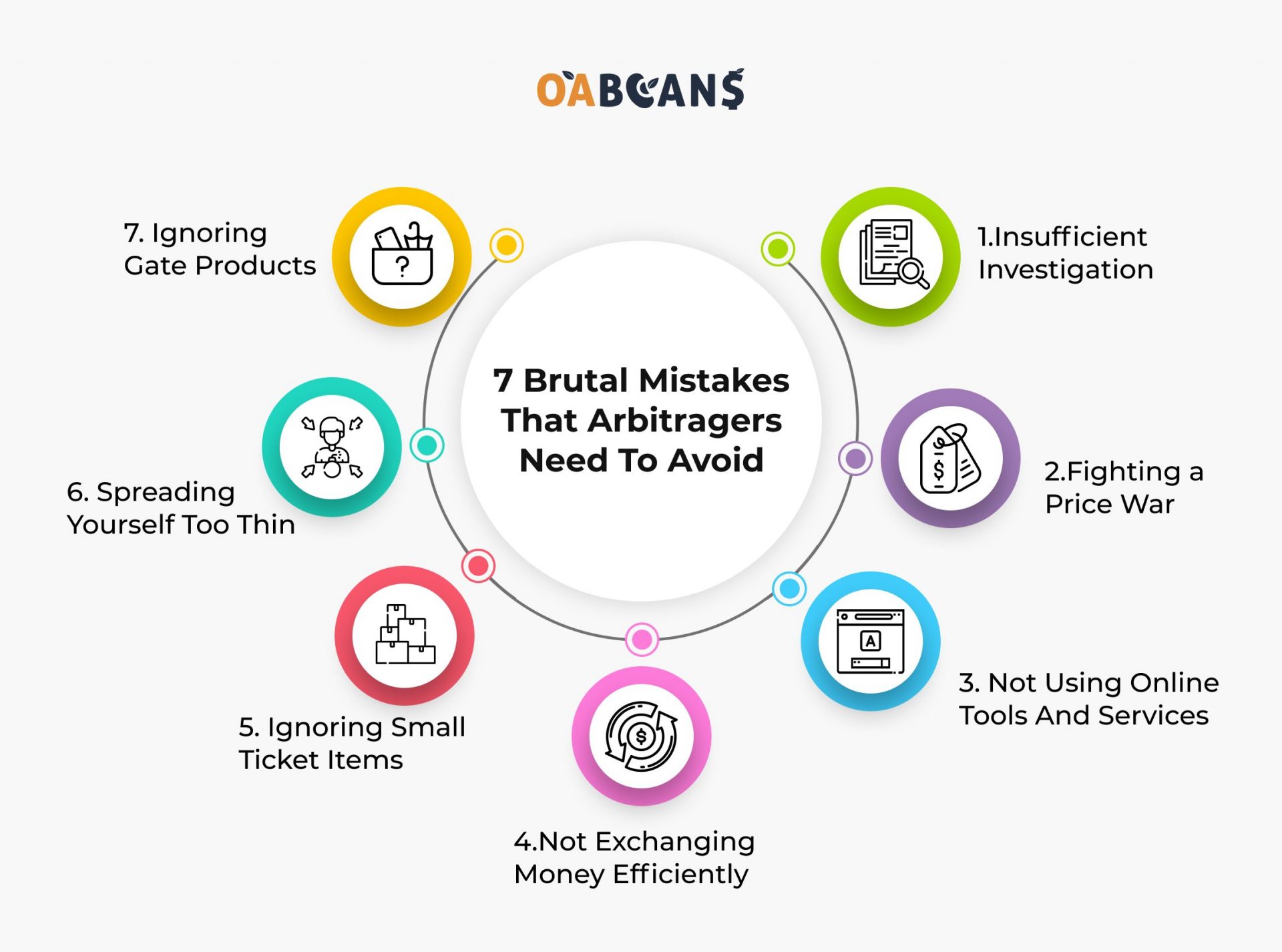
1. Insufficient Investigation
Buying on a hunch instead of data is the fastest way to lose money. A big profit margin alone is not enough: a product that sells twice a month can tie up your cash for months, and a price spike can disappear before your inventory reaches Amazon.

Before you buy, check at least these points:
- Sales volume: estimate monthly sales from BSR and Keepa data, not just the current rank. Our guide on how to read a Keepa graph shows what to look for.
- Price history: check the price history to see whether today’s price is normal or a short-lived spike.
- Competition: count FBA offers and check whether Amazon itself is on the listing.
- Restrictions and risks: confirm you are allowed to sell the brand, and watch for IP complaint history, hazmat items and expiration-dated products.
- Exact match: compare size, count, color and model number on the store page and the Amazon listing. Mismatched products lead to returns and “not as described” complaints.
If gathering all this data for every product feels like too much, a ready-made online arbitrage leads list such as OABeans does the first round of checks for you, so you can focus on verifying and buying.
2. Fighting a Price War
Dropping your price again and again to win the sale is one of the most common OA mistakes. When several sellers race to the bottom, everyone’s margin disappears, and the price often recovers a few weeks later once the cheap stock sells out.
Set a minimum price for every item that protects your profit, and let software do the adjusting. Amazon’s free Automate Pricing tool in Seller Central can match competitive prices within the limits you set, and third-party Amazon repricers offer more advanced rules. You do not always need the lowest price to win the Buy Box; patience and good seller metrics often matter just as much.
3. Not Using Online Tools and Services (or Using Too Many)
Sourcing by hand without a profit calculator, a price-history tool or a scanner extension wastes hours and leads to bad buys. On the other hand, some sellers subscribe to every tool and extension they see, which adds up quickly and creates more confusion than results.
Start lean: many free online arbitrage tools are enough for beginners, and you can add paid software only when it clearly saves you time or money. If you use an OA leads list, you will need fewer sourcing tools, because much of the research comes with each lead.
4. Not Exchanging Money Efficiently
If you buy from stores in another currency or sell on Amazon marketplaces outside your home country, currency conversion quietly eats into your margin. Compare the exchange rate and fees of Amazon’s built-in Currency Converter for Sellers with your bank and with specialist payment services before you choose how to get paid, and include conversion costs in your profit calculations.
5. Ignoring Small-Ticket Items
Low-priced items like toys, books or household basics can look insignificant next to expensive products, but ignoring them means missing out on steady profit. They are cheaper to buy and ship, so you can test more products with less cash, and they often sell faster.
Just run the numbers carefully: on very cheap items, Amazon’s referral and FBA fees take a large share of the price, so make sure the profit per unit still makes sense after fees.
6. Spreading Yourself Too Thin
At the beginning you can do everything yourself. As sales grow, sourcing, prepping, shipping, repricing and customer service start to compete for your time, and quality slips when you are overworked.
Build your business with scaling in mind: write down your processes, use a prep center when volume grows, and outsource repetitive tasks such as product research. See our guide on running an online arbitrage business with a VA for one way to free up your time.
7. Ignoring Gated Products
Many brands and categories on Amazon are restricted, so new sellers cannot list them right away. Avoiding them forever is a mistake: gated brands and categories usually have fewer competing sellers, which can mean better margins once you are approved.
Our guide on how to get ungated on Amazon explains the process step by step. OABeans leads-list members also get free access to the Amazon Ungating Course (the Ungating Sprint). Amazon makes every approval decision, so no course or service can guarantee approval, but a clear plan and the right invoices improve your chances.
FAQ
What is the biggest mistake in online arbitrage?
Buying without enough research. Checking sales volume, price history, competition and restrictions before every purchase prevents most losses.
Is online arbitrage still profitable in 2026?
Yes, for sellers who source carefully and control costs. Margins are tighter on popular products, so data-driven sourcing and avoiding the mistakes above matter more than ever.